1
Preserved originality
We avoid unnecessary polishing and replacement. Original dials, aged brass, historic repairs and wear patterns remain part of the object when safe.
Confident ownership, documented decisions, stable mechanical performance and conservation-led care for clocks that deserve more than a quick repair.
Why choose a documented atelier
Professional restoration reduces risk because every decision is visible, paced and tied to the actual condition of the object.
We avoid unnecessary polishing and replacement. Original dials, aged brass, historic repairs and wear patterns remain part of the object when safe.
Cleaning, lubrication, bushing, beat setting and regulation help the clock run more safely than repeated winding of a dry mechanism.
Service notes help future caretakers understand what was changed, what remained original and what maintenance is recommended next.
Client outcomes
Collector confidence
When work is described in plain English, owners can make decisions about budget, display and future care without guessing.
Estimate clarity • photographed notes • final care guide
Interior project support
Designers receive practical guidance for placement, humidity and winding so a restored clock can be used responsibly in a finished space.
Installation advice • object-sensitive presentation
Measured reassurance
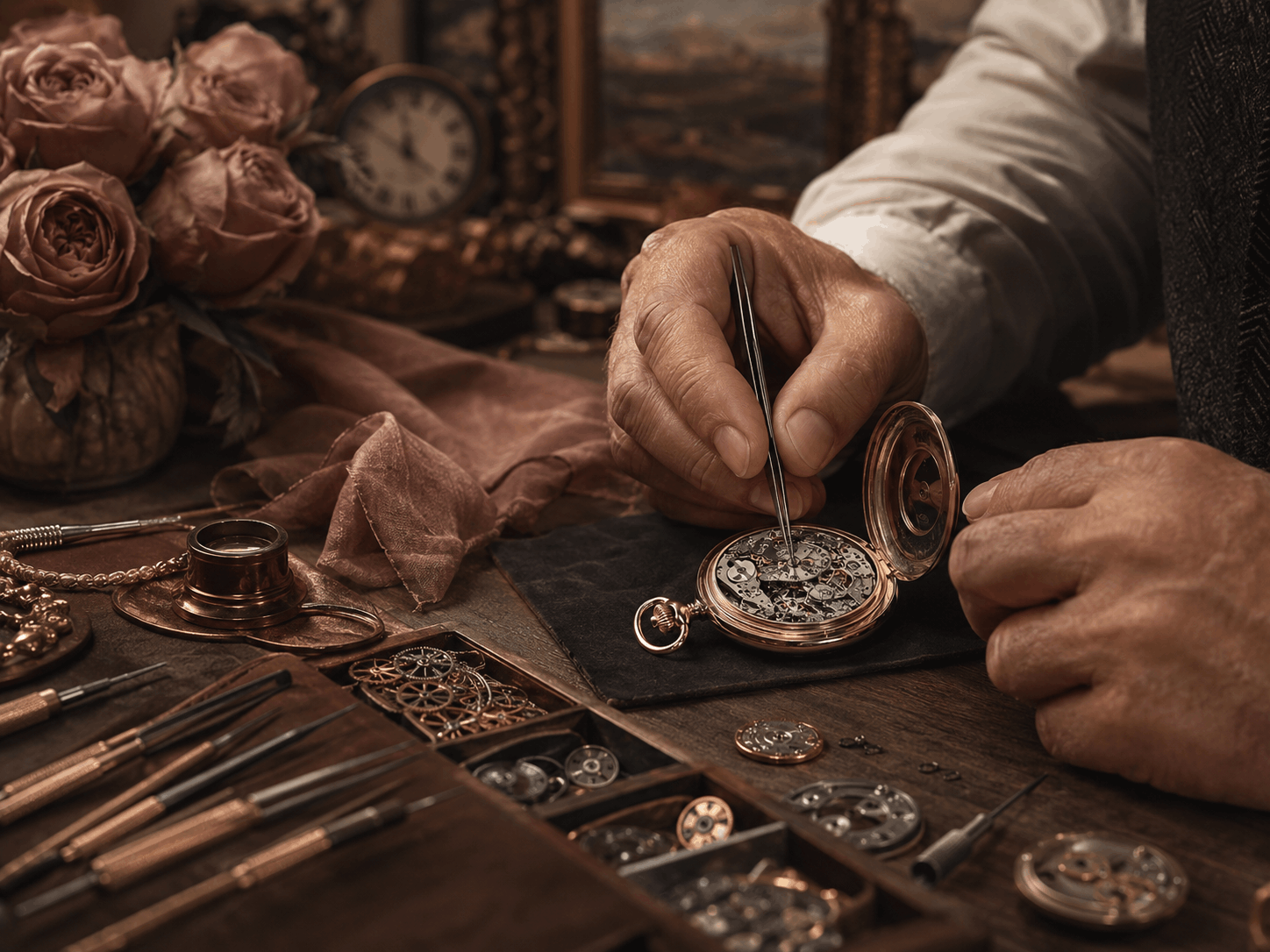
Many clocks are damaged not by age, but by well-meaning shortcuts: household oil, excessive polishing, forced winding, incorrect keys, badly fitted hands, generic screws, or a case placed out of level. These errors can create expensive secondary problems.
Our approach separates urgency from importance. A clock that has been silent for twenty years does not need to be forced into action immediately. It needs calm inspection, a safe plan and respect for the materials. That is the benefit of a specialist process.
Clear diagnosis before work reduces unnecessary spending and protects fragile surfaces.
Owners understand what happened, what was restored and how to care for the clock afterward.